The housing stock out here and why it matters for a deck
East Lake-Orient Park is a community of roughly 29,000 people, and the homes range from older single-story houses to newer builds, many with yards that back up to open space or water. That mix means we're rarely building the exact same deck twice — a raised deck off a split-level needs different footing depth and bracing than a low deck off a slab-on-grade ranch house nearby.
What doesn't change from house to house is the climate load. This is a humid subtropical part of Florida — hot, wet summers, mild winters, and no freeze-thaw cycling to worry about. The real stress on a deck here is UV breaking down wood fibers over years of direct sun, moisture and humidity working into end grain and fastener holes, afternoon thunderstorms soaking a deck several times a week for months, and wind load during storm season pulling at railings and ledger connections. We build with all of that in mind from the footings up, not as an afterthought.
Custom decks, built for the yard you actually have
A custom deck means we're not handing you a stock layout. We walk the yard, look at where the sun sits in the afternoon, note where the ground slopes or holds water after a storm, and figure out a footprint and height that actually fits the lot — whether that's a deck wrapping around a pool, a raised platform off a second story, or a simple ground-level deck for a smaller backyard.
We start every custom build the same way underneath, even if the finished deck looks nothing like the last one: strings, stakes, and batter boards to lay out the exact footprint before anything gets dug, then footings and concrete set to carry the load of the structure above them. Get that layout wrong by even a few inches and every board after it fights you. Get it right, and the rest of the build goes the way it should.
Fasteners and framing — where corners actually get cut
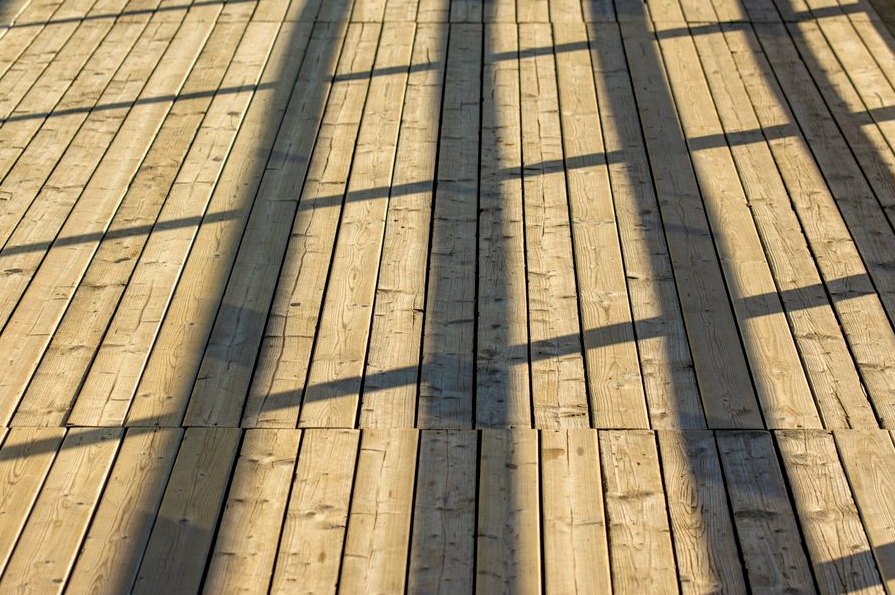
This is the part of a deck build that nobody sees once it's done, and it's also where a lot of decks around here start failing early. We fasten every decking board to each joist with two ring-shank 8D nails or 2-1/2 inch wood screws, or whatever deck screw is specified for that particular board — smooth shank nails back out over a few humid summers, and that's when boards start to cup or lift at the edges.
We don't install railings or stairs until the deck surface itself is complete. That's not us dragging out the job — it's so the surface is fully set and true before we're anchoring anything into it, which matters when railings need to hold up under real wind load during a Florida storm and not just look good on a calm day.
Privacy screens and the finishing details
A lot of homeowners in East Lake-Orient Park ask us about privacy screens once the deck itself is framed up — neighbors' sightlines, pool areas, or just wanting a corner of the yard that feels enclosed. We handle that as part of the same build, working it into the railing and framing plan rather than bolting something on after the fact, which tends to look and hold up better over time.
If you're at the point of comparing options, we'd rather walk your yard and give you a real number than have you guess from a general price list. Request your free estimate and we'll come out, look at the ground, the house, and what you actually want out of the space, and price it from there.
Getting to East Lake-Orient Park and handling the permit
We run out of Brandon, and East Lake-Orient Park is about 6.19 miles from there, so it's a short trip for us — not a special trip, just a normal part of the week. That matters when you need someone to come back out mid-build or check on something after a storm.
Permits for building and subtrade work in Hillsborough County, which covers East Lake-Orient Park, go through the county's HillsGovHub online system. Permit fees for deck work typically run $50 to $450 depending on the scope of the project, and for anything not spelled out in the county's fee schedule, the Building Official calculates it based on the estimated actual cost of the work. We handle that filing as part of the job so you're not the one figuring out HillsGovHub on your own.
Signs your deck is telling you something
Out here, the signs are usually moisture-related rather than anything to do with cold weather — this area doesn't get frost or freeze cycling, so that's not what's breaking your deck down. What we do see is boards cupping or softening where fasteners have backed out, railing posts that wiggle because the surface underneath wasn't fully set before they were anchored, and fastener heads that have popped up after a few humid seasons.
If you're noticing any of that, or just haven't had anyone look at the framing underneath in a while, it's worth having it checked before the next round of summer storms rather than after.
What Makes Brandon Different
What working in Brandon actually means for the job:
Climate
- humidity load that stresses building envelopes
Soil & Ground
- EPA radon zone: 3 (soil-gas indicator).
Local Notes
- Housing stock: median year built 1992. Source: U.S. Census ACS.
Getting Started Is Simple
-
Tell Us What's Going On
Tell us what you're seeing and when it started — you'll get a straight answer, not a sales pitch.
-
On-Site Inspection
A tech inspects the problem in person — no guessing from photos, no drive-by quotes.
-
Know the Price First
We put the fix, the timeline, and the number on paper — take your time with it.
-
Job Done, Checked, Cleaned Up
Our crew does the work, checks it, and leaves the site clean. You see everything we did.
Depending on what we find, that can mean:
- Lay out the deck area with strings, stakes, and batter boards before digging or framing.
- Confirm permits, setbacks, and inspection requirements with the local building authority before construction starts.
Typical Brandon Pricing
These are planning ranges. Nothing is final until it is in writing.
$1400–$2600
$700–$1300
Where We Work
We work across Brandon, FL. Get a Free Inspection to confirm coverage for your address.
Related Services
How We Do Business
- Free EstimatesThe visit and the written scope cost you nothing.
- Measured, not guessedWe quote what we measured, not what we assume.
- We walk you through the finished workThe job ends with a walkthrough, not a wave goodbye.
- We show up when we sayA scheduled window means someone actually arrives in it.