The ground and the houses we build on
Bloomingdale is a community of roughly 24,000 people sitting about 4.7 miles from Brandon, and like most of this part of Hillsborough County, the humidity load here puts real stress on building envelopes over time — the wall your deck ties into, the ledger board, the flashing behind it. That's where most deck problems actually start, not out at the railing where people tend to look first.
When we tie a ledger board to your house, we're flashing it properly so water can't work its way behind the siding and into the framing. That's not an optional step for us — it's the difference between a deck that lasts and one that starts rotting from the inside where you can't see it until the boards feel spongy underfoot.
We're not dealing with freeze-thaw or frost heave down here, and we won't pretend we are. What we're actually fighting is moisture that never fully dries out, UV that beats on the boards every afternoon, and the kind of wind load that comes with a Florida thunderstorm season.
Framing that actually holds
Under the decking, we set joists at code-compliant spacing and spans, and we fasten them with hangers and connectors sized for the load — not whatever's fastest to nail up. That framing is what carries furniture, foot traffic, and whatever gets thrown at it during a summer storm, so we don't cut corners on spacing just to save a joist.
Honestly, this is the part homeowners never see once the boards go down, which is exactly why we take our time here. A deck can look great for a year or two even with sloppy framing underneath — the trouble shows up later, usually right when you'd rather not be dealing with it.
What actually goes into the deck
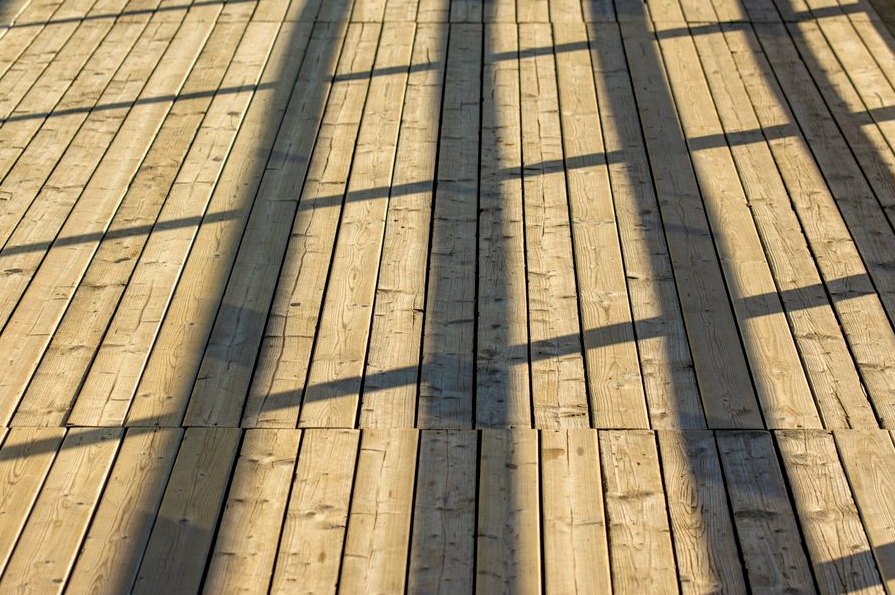
We build primarily with composite deck boards, which hold up well against the sun and moisture without the maintenance cycle that wood demands out here. Guardrail and stair components get built to match, so the whole structure reads as one deck rather than a base with mismatched add-ons bolted around it.
If privacy is part of what you're after, we can work a privacy screen into the design — it's a common request once people start actually using their deck and realize how close the neighbor's yard is. It's not a separate project bolted on after the fact; we plan for it as part of the layout so it doesn't look like an afterthought.
Stairs, and what they run
Stairs are one of the few pieces of a deck build where we can give you a real number up front: $700 to $1300 for a set with four risers. That range covers the structural work and the guardrail and stair components that go with it — the stringers, the fastening, the railing that ties in at the top.
Where a given job lands in that range usually comes down to how the stairs meet the yard — grade, landing conditions, how much the ground slopes away from the deck. We'll walk that with you before we ever give you a final figure, so you're not guessing.
Getting our crew to Bloomingdale
We work out of the Brandon area, and Bloomingdale is close enough that getting a crew to your yard isn't a scheduling headache. We've spent plenty of time in the older Brandon-area neighborhoods too — Brandon Hills Ext, for instance, is a community of 76 homes built between 1959 and 2005 with a median year built of 1965 — and that kind of age range is exactly why we don't treat ledger attachment as a one-size-fits-all step. Older houses and newer ones don't always give you the same wall to tie into.
That experience carries over directly to Bloomingdale. Whether your home was built recently or has a few decades on it, we're looking at the same things before we start: what the ledger's attaching to, what the soil's doing under the footings, and what the permit process requires for your specific address before a single joist goes up.
Signs it's time to call
The tells are usually pretty consistent: a ledger board that feels soft when you press on it, hangers with rust starting to bloom, boards that have gone gray and splintery from sun exposure, or a rail that's gotten a little more wobbly than it used to be. None of that means the whole deck is a loss — sometimes it's the ledger and flashing that need attention, sometimes it's isolated joists.
The honest answer is we won't know for sure until we're standing on it. But if any of that sounds familiar, it's worth having someone look before the next round of storms decides for you.
What Makes Brandon Different
What working in Brandon actually means for the job:
Climate
- Freeze risk: low — relevant to freeze/thaw foundation stress.
Soil & Ground
- Secondary soil series: Pomello (FS). Moderately well drained. Source: USDA NRCS Web Soil Survey.
Local Notes
- Housing stock: median year built 1992. Source: U.S. Census ACS.
Getting Started Is Simple
-
Tell Us What's Going On
Tell us what you're seeing and when it started — you'll get a straight answer, not a sales pitch.
-
On-Site Inspection
A tech inspects the problem in person — no guessing from photos, no drive-by quotes.
-
Know the Price First
We put the fix, the timeline, and the number on paper — take your time with it.
-
Job Done, Checked, Cleaned Up
Our crew does the work, checks it, and leaves the site clean. You see everything we did.
Depending on what we find, that can mean:
- Verify guardrail height, baluster spacing, stair riser, and tread dimensions at final inspection.
- Lay out the deck area with strings, stakes, and batter boards before digging or framing.
Typical Brandon Pricing
These are planning ranges. Nothing is final until it is in writing.
$1800–$3000
$56–$1100
Where We Work
We work across Brandon, FL. Get My Free Inspection to confirm coverage for your address.
Related Services
How We Do Business
- Free EstimatesThe visit and the written scope cost you nothing.
- No surprise chargesThe bill matches the quote — extras get your OK first.
- We answer the phone ourselvesWhen you call, someone who knows your job answers.
- Photos of the finished workThe finished work is documented, not just described.