Big-box stores and the deck-building question
We get asked this one a lot, usually by someone who's already walked the lumber aisle: does Home Depot have contractors to build decks? The honest answer is that Home Depot's core business is selling the materials — decking boards, framing lumber, deck screws and hidden fasteners, the hardware that holds a structure together. In some markets they run installation referral programs that connect you with an independent contractor bidding through their system, but the crew that shows up isn't a Home Depot crew in the way you'd think of a local outfit that's been building in your neighborhood for years.
We've built relationships with manufacturers whose boards and hardware we trust to hold up in Florida's weather — the heavy UV exposure, the humidity, the way a fastener needs to grip through a hurricane season without loosening. That matters more than most people realize when they're comparing a retail referral against a builder who's picked their own suppliers based on what actually performs here.
Gazebos come up in the same conversation fairly often — folks want a deck and a shade structure planned together, or they're deciding between the two. Either way, the same vetting questions apply: who's actually swinging the hammer, what materials are they using, and are they licensed to pull the permit.
Checking the license and insurance before anyone touches your yard
Before we ever talk design or budget, a homeowner should be comfortable asking to see proof of licensing and insurance — and a contractor worth hiring won't hesitate to hand it over. Building and subtrade permits for Brandon projects run through Hillsborough County's HillsGovHub online system, so any legitimate builder should be pulling permits through that same channel and can walk you through what that process looks like for your specific project.
Insurance matters just as much as licensing, maybe more, because a deck involves framing materials — joists, beams, posts, hardware — running $1,800 to $3,000 depending on the size and design, plus the labor to set it all correctly. If something goes wrong mid-project and the crew isn't insured, that cost risk lands on you, not them. Ask to see current coverage, not just a license number recited over the phone.
Reading a quote like a contractor would
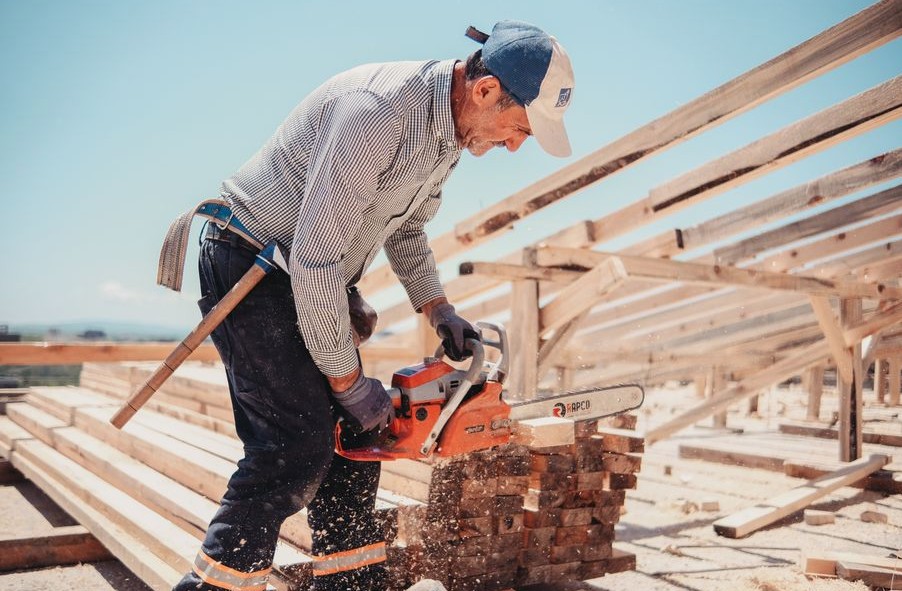
When you're comparing bids, look past the bottom-line number and see whether the breakdown makes sense. Framing materials typically run $1,800 to $3,000, and fasteners — deck screws or hidden fastener systems — can range anywhere from $56 to $1,100 depending on the decking material and how much hardware the design calls for. If one quote is dramatically lower than the others, ask what's being cut: is it the ledger board flashing where the deck ties into the house, the spacing and connectors on the joists, or the fasteners used to secure the decking boards themselves?
A proper quote should reflect joists set at code-compliant spacing with appropriate hangers, and decking fastened to every joist with two ring-shank 8D nails or 2-1/2 inch wood screws, or whatever deck screw is specified for that board. If a bid skips over these details or just gives you a lump sum with no explanation, that's worth a follow-up question before you sign anything.
Red flags worth walking away from
The biggest one is a contractor who can't or won't explain how they're handling the ledger board — that's the connection point where the whole deck attaches to your house, and it needs to be flashed correctly to keep moisture from working its way into the framing over time. Given how much humidity and rot risk this area deals with, that detail isn't optional, and a builder who glosses over it is telling you something.
Other red flags: pressure to pay the full amount upfront, no written scope of work, or vague answers about permitting through HillsGovHub. A contractor who's done this before in Hillsborough County should be able to talk through that process without stumbling. And if termites or moisture damage in the ground come up and the builder brushes past it instead of talking about how the framing and fasteners are chosen to handle it, ask more questions.
Why an older neighborhood changes the conversation a little
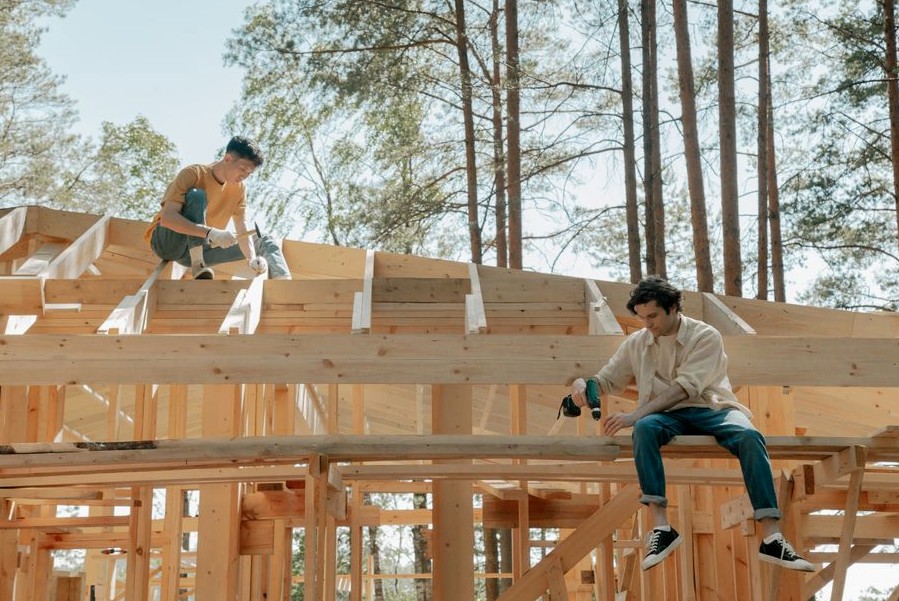
Brandon Hills Ext, for example, is a community of 76 homes built between 1959 and 2005, with a median year built of 1965 — which means a lot of decks going onto these lots are attaching to older ledger framing, older siding, sometimes older soil conditions too. The secondary soil series here, Pomello, is moderately well drained, which is generally workable for footings but still worth a builder actually walking the yard rather than quoting off a satellite photo.
With roughly 116,365 people in the broader area, there's no shortage of builders competing for the work, which is exactly why it pays to ask these questions upfront instead of assuming one quote is like any other.
Getting a number that's actually yours
The truth is, none of this — the licensing, the fastener specs, the ledger flashing — means much until someone's actually looked at your yard, your house, and what you want built. We're happy to walk through all of it with you and put together a free quote based on your actual lot, not a generic estimate. Reach out and we'll get you a real number to compare against whatever else you've collected.
What Makes Brandon Different
What working in Brandon actually means for the job:
Climate
- January avg low 52.8 °F. July avg high 91.0 °F. Seasonal range ~38 °F. NOAA Climate Normals 1991–2020.
- Annual heating degree days (base 65 °F): 433. NOAA Climate Normals 1991–2020.
- Annual cooling degree days (base 65 °F): 3928. NOAA Climate Normals 1991–2020.
- freeze/thaw cycling in colder months
Soil & Ground
- Secondary soil series: Pomello (FS). Moderately well drained. Source: USDA NRCS Web Soil Survey.
- local soils formed in altered marine deposits — the geology doing the moving under area foundations. Source: USDA NRCS Web Soil Survey.
Local Notes
- Median home value $293,800. Source: U.S. Census ACS.
- Serving Brandon, FL and surrounding communities.
- Total population 116,365. Source: U.S. Census ACS.
- Housing stock: median year built 1992. Source: U.S. Census ACS.
What the Work Involves
A visual look at what the service involves.

Getting Started Is Simple
-
Tell Us What's Going On
Tell us what you're seeing and when it started — you'll get a straight answer, not a sales pitch.
-
On-Site Inspection
A tech inspects the problem in person — no guessing from photos, no drive-by quotes.
-
Know the Price First
We put the fix, the timeline, and the number on paper — take your time with it.
-
Job Done, Checked, Cleaned Up
Our crew does the work, checks it, and leaves the site clean. You see everything we did.
Depending on what we find, that can mean:
- Schedule framing and final inspections before closing out the job.
- Verify guardrail height, baluster spacing, stair riser, and tread dimensions at final inspection.
Typical Brandon Pricing
These are planning ranges. Nothing is final until it is in writing.
$1400–$2600
$700–$1300
Where We Work
We work across Brandon, FL. Request a Free Inspection to confirm coverage for your address.
Related Services
How We Do Business
- Free EstimatesThe visit and the written scope cost you nothing.
- Straight answers, no sales pitchYou'll hear what we'd do and why — the decision stays yours.
- The quote is the priceThe quote is the invoice. Surprises are for birthdays.
- Measured, not guessedWe quote what we measured, not what we assume.
Updated August 2026