What the soil report actually tells us
A soil report we've reviewed for a project site in this part of Hillsborough County describes the ground here as Candler-Urban land complex — excessively drained, with low shrink-swell potential and very low available water capacity. In plain terms, the soil doesn't hold water and it doesn't expand or contract much when it does or doesn't rain, which is honestly good news for a patio footing. The borings on that same site came back sandy — SP, SP-SM, and SC classifications — all the way down to termination depth.
That matters because sandy, well-drained soil behaves very differently than clay. It compacts predictably and it doesn't heave with moisture the way a clay-heavy lot would. But sandy soil also means we're not guessing at bearing capacity — we verify it before anyone pours anything, because a patio that looks fine going in can settle unevenly if the footing wasn't checked against what's actually down there.
How we build the frame that carries it
For a covered patio, the sequence is footings first — we excavate and form them, then have the depth and bearing verified before the concrete goes in. Skipping that check is how you end up with a corner that sinks two years later. Once the footings are set, we install the posts and beams that establish the load path, which is really the whole structure's backbone — everything else, roof or not, hangs off that.
We frame with joist hangers and deck screws rather than toe-nailing connections, because a mechanically fastened joint holds up far better against wind uplift than a nailed one does. Framing materials — joists, beams, posts, and hardware — typically run $1,800 to $3,000 depending on the size and layout of the patio, and that's before decking, roofing, or finish work.
What the weather here actually does to a patio
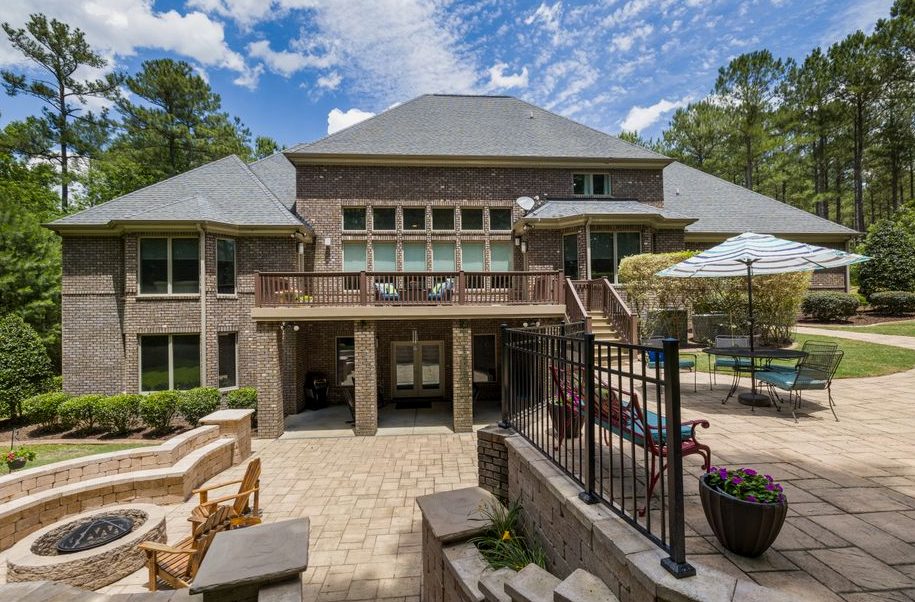
This part of Florida doesn't get freeze-thaw cycling, frost heave, or snow load — none of the cold-climate damage you'd worry about up north is a factor here, and we won't pretend otherwise. What actually wears on a patio in Palm River-Clair Mel is UV exposure baking exposed wood and fasteners, humidity working into end grain and framing joints until rot sets in, and the afternoon thunderstorms that roll through all summer long dumping water fast.
Annual rainfall here runs around 49.5 inches, with the wet season from June through September and August typically the wettest month at close to 9 inches. That's a lot of water hitting a structure in a short window, which is exactly why we care about hurricane-rated fastening and proper drainage under and around the slab — wind load and standing water are the real threats, not cold.
Termites and what that means for framing choices
Subterranean termites are a fact of life for wood structures anywhere in this region, and a patio's framing sits close enough to grade that it's worth thinking about up front. Some homeowners in the cities around here have started asking about composite decking specifically to get away from that maintenance cycle, and it's a reasonable option to weigh against traditional lumber, especially on a patio that's going to see full sun and full rain most of the year.
Whether you go composite or stick with treated lumber, the fastener choice and the framing details — hangers, screws, flashing where wood meets the slab — matter more here than the species of wood itself. That's where a lot of older patios in this neighborhood start failing first.
Signs it's more than a cosmetic fix
The patios we get called to repair in Palm River-Clair Mel usually show it in the same few places — a post base that's gone soft or spongy, joist hangers with rust bleeding down the wood, or a corner of the slab that's settled just enough to pool water after a storm instead of shedding it. Any one of those is worth a look before it becomes a structural issue rather than a repair.
Given the sandy, well-drained soil in this area, settling is less often about the ground itself and more about a footing that wasn't verified deep enough or wide enough for the load in the first place. We check bearing and drainage together, because on a lot with excessively drained soil, water that isn't shedding off the patio properly is going somewhere — usually into the framing.
Getting our crew out to your job
We run out of Brandon, and Palm River-Clair Mel is close enough that scheduling and site visits aren't a logistical issue — we're there the same day for estimates and back on schedule for the work itself. Permitting and inspection go through Hillsborough County, and footing depth and bearing get verified as part of that process before we pour, which lines up with how the county wants to see the work documented anyway.
Access varies lot to lot in this neighborhood — some properties have tight side yards or older fencing that changes how we stage materials and equipment — so we walk the site before we quote it rather than pricing off a description over the phone.
What Makes Brandon Different
What working in Brandon actually means for the job:
Climate
- Annual precipitation ~49.5 in. Rainy season June–September; wettest month August (~9.0 in), driest November (~1.4 in). NOAA Climate Normals 1991–2020.
Soil & Ground
- Dominant soil: Adamsville (FS). Somewhat poorly drained. Source: USDA NRCS Web Soil Survey.
Local Notes
- Median home value $293,800. Source: U.S. Census ACS.
Getting Started Is Simple
-
Tell Us What's Going On
Tell us what you're seeing and when it started — you'll get a straight answer, not a sales pitch.
-
On-Site Inspection
A tech inspects the problem in person — no guessing from photos, no drive-by quotes.
-
Know the Price First
We put the fix, the timeline, and the number on paper — take your time with it.
-
Job Done, Checked, Cleaned Up
Our crew does the work, checks it, and leaves the site clean. You see everything we did.
Depending on what we find, that can mean:
- Excavate and form footings, then have footing depth and bearing verified before the concrete pour.
- Install posts and beams to establish the primary load path and support structure.
Typical Brandon Pricing
These are planning ranges. Nothing is final until it is in writing.
$1400–$2600
$700–$1300
Where We Work
We work across Brandon, FL. Get a Free Inspection to confirm coverage for your address.
Related Services
How We Do Business
- Free EstimatesThe visit and the written scope cost you nothing.
- We show up when we sayIf the plan changes, you hear it from us first.
- Local crew, local jobsThe people quoting your job work these same streets.
- No-pressure estimatesThe estimate is information, not an obligation.